
Visiter Rome en couple : les incontournables et astuces pour un séjour romantique
Rome, la ville éternelle, est une destination idéale pour les couples à la recherche d’histoire, de culture et de romantisme. Que vous souhaitiez explorer le Colisée, flâner dans le Forum Romain, ou vous promener au bord de la fontaine de Trevi, il y a tant à voir et à faire dans cette magnifique ville. Dans cet article, nous vous présentons quelques-uns des sites incontournables pour visiter Rome en couple, ainsi que nos conseils pour profiter pleinement de votre séjour.
Les monuments emblématiques à ne pas manquer
Il serait impensable de venir à Rome sans visiter certains de ses monuments les plus célèbres. Voici notre sélection des lieux incontournables pour les amoureux qui souhaitent découvrir l’histoire et la beauté de la ville :
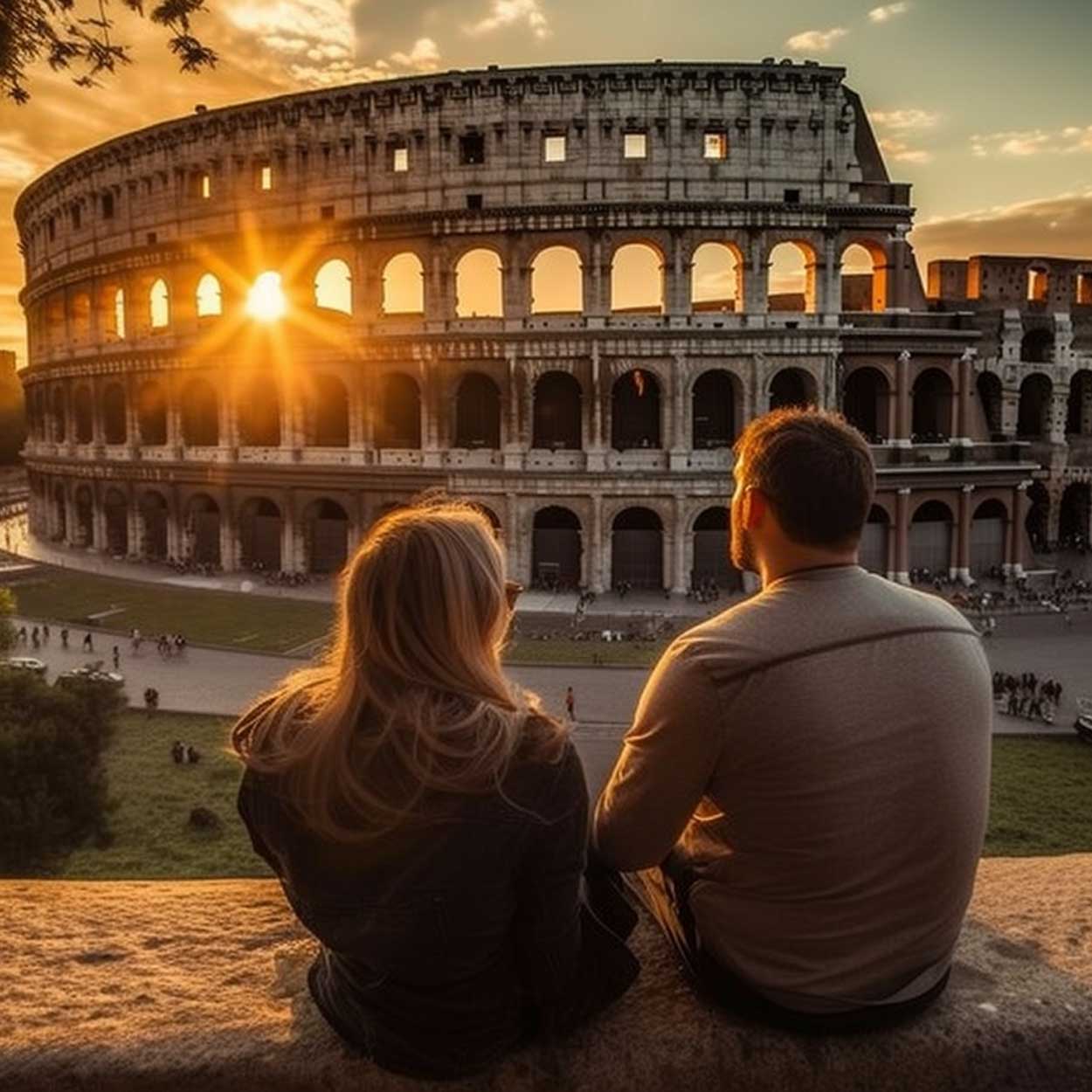
- Le Colisée : symbole de la grandeur de l’Empire romain, le Colisée est un véritable chef-d’œuvre architectural. Sa visite vous permettra de vous plonger dans l’atmosphère des jeux du cirque et des combats de gladiateurs qui ont fait sa renommée.
- Le Forum Romain et le Mont Palatin : un autre joyau de l’histoire romaine, le Forum était le centre névralgique de la vie politique, économique et sociale de la Rome antique. Le Mont Palatin, quant à lui, offre une vue imprenable sur le Forum et les vestiges des palais impériaux.
- La fontaine de Trevi : véritable icône de la ville, cette fontaine baroque est le lieu idéal pour faire un vœu d’amour éternel. N’oubliez pas de jeter une pièce de monnaie dans l’eau, selon la tradition !
- La Villa Borghèse : ce somptueux parc offre non seulement de magnifiques jardins à l’italienne et des sculptures, mais aussi un superbe point de vue sur Rome depuis la terrasse du Pincio.

Les meilleurs pass pour visiter Rome en couple
Pour profiter pleinement de votre séjour à Rome, il peut être intéressant d’opter pour un pass touristique qui vous permettra de bénéficier de réductions sur les entrées aux monuments et musées, ainsi que sur les transports en commun. Voici quelques-unes des options disponibles :
- Roma Pass : ce pass inclut l’accès gratuit à deux sites de votre choix (parmi certains incontournables comme le Colisée, le Forum Romain et le Mont Palatin), ainsi que des réductions pour d’autres attractions et musées. De plus, il vous fait bénéficier de la gratuité des transports en commun durant la période de validité du pass (48 ou 72 heures).
- Vatican & Rome Card : cette carte combine les avantages du Roma Pass avec l’accès aux musées du Vatican et à la basilique Saint-Pierre. Elle est valable pendant trois jours.
- Omnia Card : en plus des prestations offertes par le Vatican & Rome Card, l’Omnia Card inclut un guide audio pour la basilique Saint-Pierre et l’accès à un bus touristique Hop-on Hop-off pendant trois jours.
Astuce : visitez les sites gratuits pour économiser
Pour les couples qui souhaitent découvrir Rome sans se ruiner, sachez qu’il existe de nombreuses attractions gratuites dans la ville. Parmi elles, on peut citer la basilique Saint-Pierre (hors musées du Vatican), le Panthéon, ou encore les églises Santa Maria sopra Minerva et San Luigi dei Francesi, qui abritent des œuvres d’art exceptionnelles.
Les activités romantiques à vivre à deux à Rome
En plus de la visite des monuments emblématiques, il y a de nombreuses autres façons de profiter de votre séjour à Rome en couple. Voici quelques suggestions d’activités à faire à deux :
- Se promener dans le quartier de Trastevere : ce quartier pittoresque, avec ses ruelles pavées et ses maisons colorées, est parfait pour une balade romantique. Vous pourrez également y déguster un bon repas dans l’un de ses nombreux restaurants et trattorias.
- Assister à un opéra au Teatro dell’Opera di Roma : une soirée lyrique est une expérience inoubliable à partager en amoureux. Le Teatro dell’Opera propose régulièrement des représentations d’œuvres célèbres.
- Prendre un cours de cuisine italienne : apprendre à préparer ensemble des plats typiques de la cuisine romaine est une excellente occasion de passer un moment convivial et gourmand.
- Faire une croisière sur le Tibre : naviguer sur les eaux du fleuve qui traverse Rome vous offrira un point de vue original sur certains monuments, tout en profitant d’un cadre paisible et intimiste.
En conclusion, visiter Rome en couple est une expérience inoubliable qui vous permettra de découvrir l’histoire et la culture de cette ville fascinante, tout en partageant des moments romantiques et uniques. N’hésitez pas à opter pour un pass touristique afin de profiter au mieux de votre séjour et de réaliser quelques économies. Buon viaggio !